
Engineering articlesPWD Schedule of Rates explained: editions, zones and how to use them
What the PWD Schedule of Rates is, how its four schedules, four zones and editions work, what a schedule rate includes, and how to read an item correctly.
By Muhammad Sarowar Hossain, Founder & CEOPublished 27 October 2026Updated 24 November 20266 min read

The Schedule of Rates (SoR) of the Public Works Department is the official price list for building works in Bangladesh. It gives a complete rate for each standard item of work, and it is the basis of estimates for government buildings and the reference many private estimates start from.
The four schedules
| Schedule | Covers |
|---|---|
| Civil works | earthwork, concrete, RCC, brickwork, plaster, flooring, carpentry, steel, roofing, sanitary and more |
| Electro-mechanical (E/M) | electrical installation, pumps, generators, air-conditioning items |
| Retrofitting | strengthening and repair: jacketing, micro-concrete, epoxy, FRP, anchors |
| Lift | lifts and escalators |
A building estimate normally draws on the civil and the E/M schedules together.
What a schedule rate includes
At the basic rates of the zone.
Editions
Each schedule is revised from time to time, and an edition stays in force until the next one takes effect. Two things follow. An estimate must say which edition it used, and a bill for old work may have to be checked against an edition that is no longer current. Estimatrix carries every edition it has and uses the one in force on your project's date, or on a date you choose when checking an older bill.
The four rate zones
The same item has a different rate in different parts of the country, because carrying materials and hiring labour cost different amounts.
- Zone A: Dhaka and Mymensingh divisions
- Zone B: Chattogram and Sylhet divisions
- Zone C: Khulna and Barishal divisions and Gopalganj
- Zone D: Rajshahi and Rangpur divisions
The zone is decided by where the work is, not where the contractor's office is. In Estimatrix you choose the project district and the zone is set for you.
What a schedule rate includes
A published rate is a complete rate: materials delivered to site, labour, tools and plant, the contractor's overhead and profit, and VAT. That is why an official estimate is simply the schedule rates multiplied by the quantities and added up.
It is also why a contractor preparing a tender cannot add profit and VAT on top of a schedule rate without counting them twice. The mark-ups have to be understood first; VAT, AIT, profit and overhead explains how.
Basic rates
Besides item rates, the schedule publishes basic rates for each zone: cement per bag, sand and stone per cubic metre, bricks, rod, and daily labour. The item rates are built from these through rate analyses, and so can yours be, when a drawing asks for something the schedule has no item for.
Reading an item correctly
Items are numbered by chapter; chapter 07, for example, is reinforced cement concrete. An item rarely stands alone. Part of its specification, such as the mix ratio, the type of aggregate or the curing, is written once in a heading above a group of items and applies to all of them.
So read upwards before you use a rate. Two items that look alike may differ by a heading: stone chips or brick chips, ground floor or upper floors. The Estimatrix search reads the headings too, so a search for "40 MPa column" finds the right item with its full description.
Metric and imperial
Schedule rates are published per metric unit. If your project is in feet, each rate has to be converted per square foot, cubic foot or running foot. Estimatrix does the conversion from the published figure, so the amount is identical in either system.
A worked example: one line of an official estimate
Take RCC in columns, 42.5 cum, on a project in Gazipur. The district is in Dhaka division, so the zone is A. Suppose the Zone A rate of the item in the edition in force is Tk 10,150 per cum. That figure is an example to show the arithmetic; read the real one from the schedule.
- Amount = 42.5 × 10,150 = Tk 4,31,375
Nothing is added to it. Profit, overhead and VAT are already inside the rate, so the line is finished.
The same line in a project measured in feet:
- Quantity = 42.5 × 35.3147 = 1,500.9 cft
- Rate = 10,150 ÷ 35.3147 = Tk 287.42 per cft
- Amount = 1,500.9 × 287.42 = about Tk 4,31,400
The few taka of difference come from rounding the rate to two decimals. The published rate per cubic metre stays the reference.
When the schedule has no item for the work
Drawings often ask for something the schedule does not list: a different thickness, a new product, an unusual finish. Work through these steps in order.
- Look again, with the headings. Search by the material and by the member. Many "missing" items sit under a heading the first search did not read.
- Check the other schedules. A strengthening item is in the retrofitting schedule, a pump or a panel in the electro-mechanical one.
- Use the nearest item only if the specification really matches. A rate for 1:2:4 concrete is not a rate for 1:1.5:3.
- Otherwise build an analysed rate. Take the materials, labour and equipment for one unit, price them at the basic rates of the same edition and zone, and add the same mark-ups the schedule allows. See rate analysis on the PWD SoR.
- Mark it as a non-schedule item in the estimate and attach the analysis. On public work it needs the approval of the engineer in charge before it is used.
What to write on the cover of an estimate
An estimate built on the schedule can be checked by anyone, but only if it says what it was built on. State these five things:
- which schedules were used (civil, electro-mechanical, retrofitting, lift);
- the edition of each;
- the zone, and the district that decides it;
- the unit system, metric or imperial;
- which items, if any, are not schedule items, and where their analyses are.
Questions people ask
Can I use a Zone A rate for a site in Rajshahi? No. Rajshahi division is in Zone D. A wrong zone moves every line of the estimate by the difference between the two zones.
Is the rate for an upper floor the same as for the ground floor? Not always. Some items carry a separate heading for work on upper floors, so read the heading above the item before you use its rate.
Why do my metric and imperial totals differ by a few taka? The converted rate is rounded to two decimals. The rate published per metric unit stays the reference.
My site is near a division boundary. Which zone applies? The zone of the district where the work is built, whatever the distance to the next district.
A new edition came out during my project. Which one applies? The contract decides. As a rule the work is priced on the edition the estimate or the tender was based on, and a later edition matters only where the contract says so.
How far to trust it
A schedule rate is exact for an official estimate and approximate for real cost, because prices move between editions. Compare it with today's prices before you commit to a tender: see PWD rate or market rate.
Any software copy of the schedule is a transcription. Check critical rates against the official printed schedule before contractual use, and report a wrong rate through the Estimatrix feedback tracker so it is corrected for everyone. You can search every item and zone in the SoR browser.
#pwd sor#rates#zones
Related articles
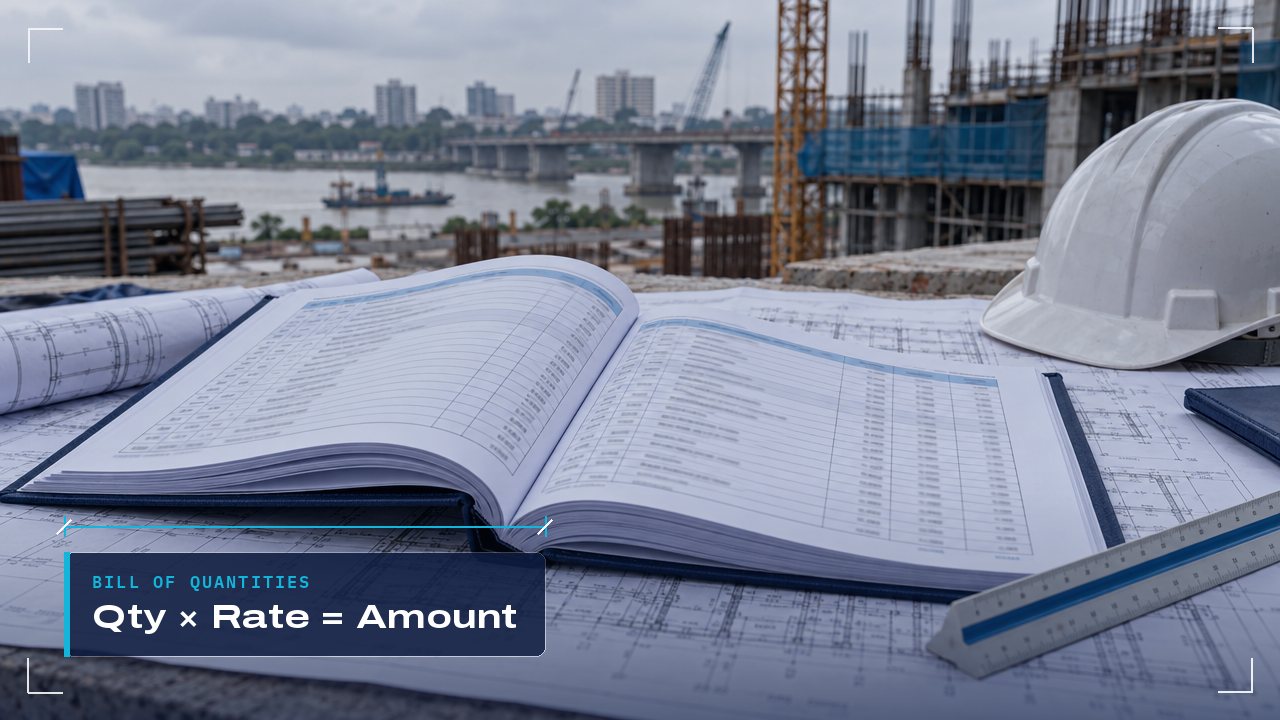
What is a bill of quantities (BOQ)? A practical guide for Bangladesh
What a BOQ is, what each column means, how it is measured and priced, and the mistakes that cost money, explained with a small worked example.
30 Oct 2026 · 7 min readRead
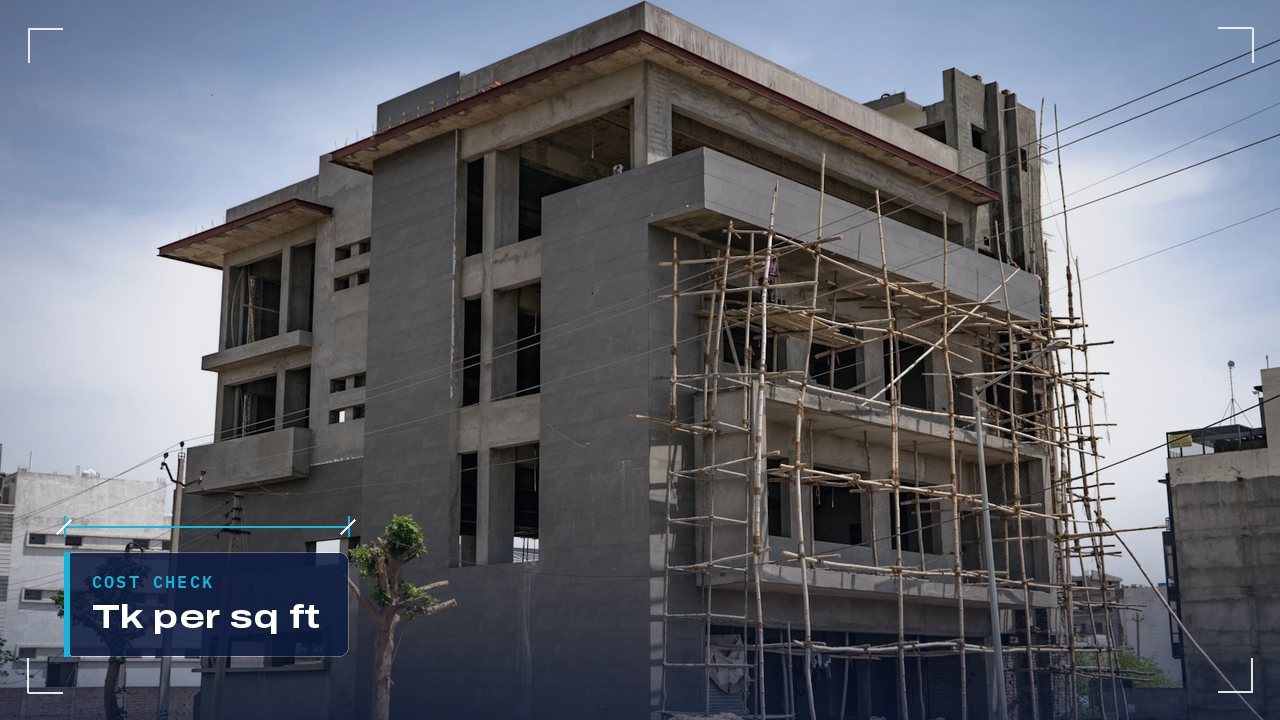
Construction cost per square foot in Bangladesh (2026): rates, adjustments and checks
What a building costs per square foot in Bangladesh in 2026 for apartments, offices, factories, hospitals and steel sheds, what moves the figure, and how to use it to check a BOQ.
28 Oct 2026 · 6 min readRead
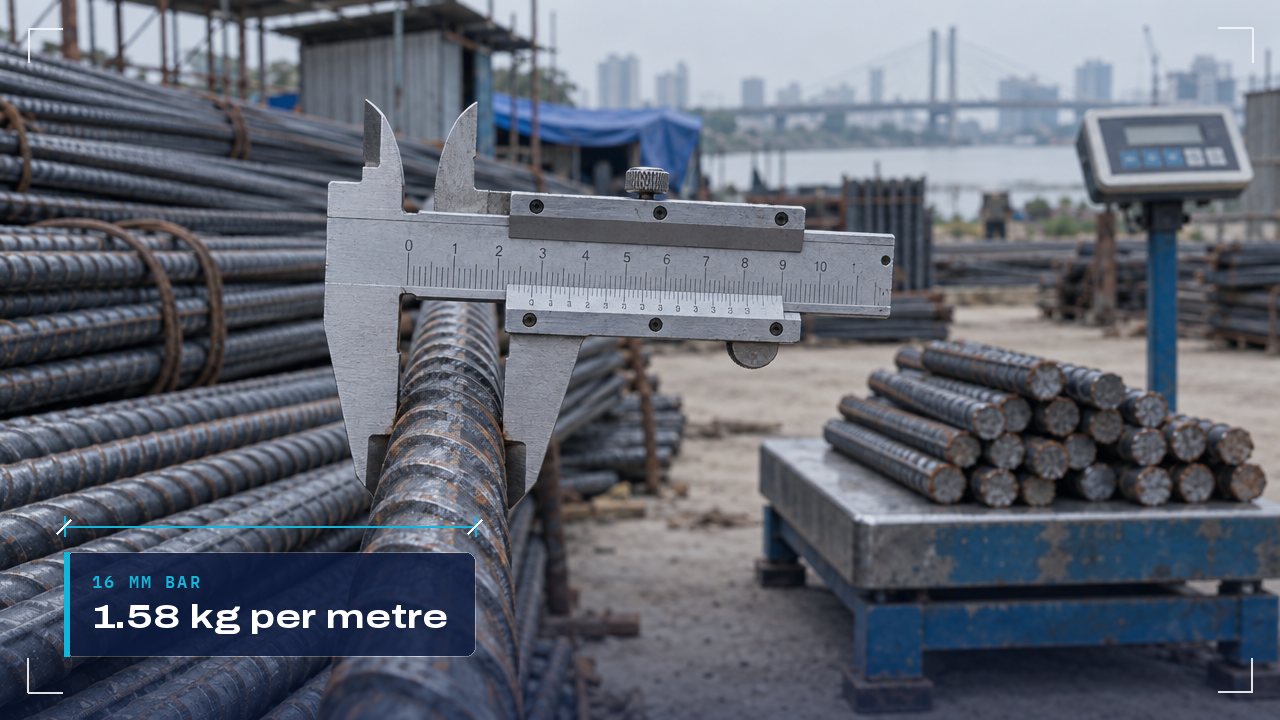
Rebar weight calculation: the D² ÷ 162 rule, with a table in kg per metre and per foot
Where the D² ÷ 162 rule comes from, the unit weight of every common bar in kg per metre and per foot, a worked example and the mistakes that put a steel estimate wrong.
23 Oct 2026 · 6 min readRead